Choosing between SEO vs Google Ads is the most critical strategic decision your business will make when allocating digital growth budgets to capture search market share. Having spent over 14 years architecting multi-channel acquisition funnels, I have seen hundreds of enterprises waste valuable capital simply because they treated Search Engine Optimization (SEO) and Google Pay-Per-Click (PPC) ads as competing channels rather than complementary growth engines. In 2026, navigating search engine landscapes demands a clear, data-driven understanding of how each acquisition model generates revenue, mitigates business risks, and impacts your bottom line.
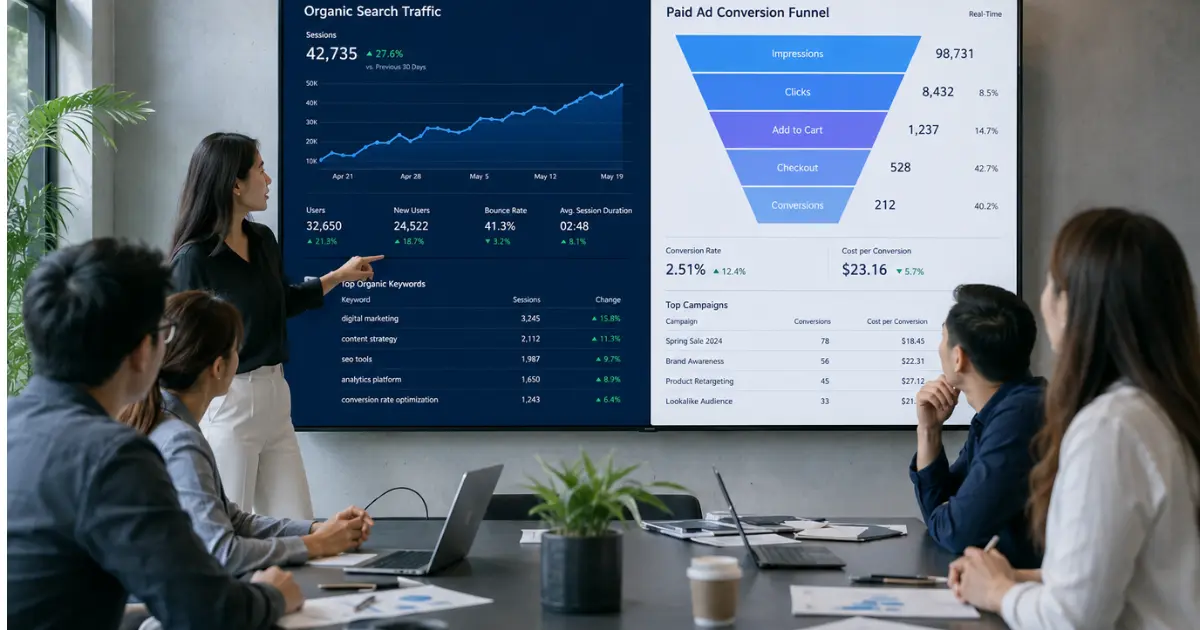
The Fundamental Divide: Organic Asset vs. Paid Access
To make an informed decision for your organization, you must first understand the structural difference between these two core search strategies.
SEO represents long-term digital real estate ownership. The objective is to build sustainable organic search authority by optimizing technical site architecture, crafting high-value topical content, and securing strong domain trust. Once your site claims top organic positions, it generates consistent, high-intent traffic without charging you a fee for every visitor who clicks on your link.
Google Ads, on the other hand, operates as a paid access model. It allows your business to bypass organic waiting periods and instantly place your brand at the absolute top of search results pages for specific high-intent keywords. While Google Ads delivers instant traffic, visibility, and leads, it functions on an active pay-per-click system: the moment you pause your ad budget, your lead volume drops to zero.
Core Advantages of SEO
- Compounding Cost Efficiency: Unlike paid ads, organic traffic does not carry a direct cost per click. Over time, as your content ranks for hundreds of related long-tail keywords, your cost per acquisition drops dramatically.
- Higher User Trust and Credibility: A large segment of internet users naturally bypass paid ad listings and click on top organic search results, viewing organic rankings as an unbiased mark of industry authority.
- Sustainable, Round-the-Clock Traffic: High-ranking organic assets continue to drive qualified traffic, leads, and sales 24/7, even during periods when your overall marketing spend is reduced
Key Challenges of SEO
- Delayed Time-to-Results: SEO requires patience. Building domain authority, fixing technical site health, and ranking for competitive keywords typically takes several months of consistent execution.
- Vulnerability to Algorithm Updates: Search engine algorithms evolve continuously. Shifts in core ranking systems or generative AI integration can cause temporary fluctuations in organic search traffic.
Deconstructing Google Ads (PPC)
Google Ads is the ultimate high-velocity revenue engine, designed to give your business immediate visibility precisely when potential customers are ready to buy.
Core Advantages of Google Ads
- Instant Visibility and Speed: Google Ads campaigns can launch within hours, immediately positioning your brand at the top of search engine results for competitive, high-intent keywords.
- Hyper-Targeted Traffic Control: You maintain total control over who sees your ads based on explicit search queries, geographic locations, device types, languages, and time of day.
- Precise Budget and ROI Tracking: Every ad dollar spent is linked directly to trackable user actions, making it easy to measure your exact Return on Ad Spend (ROAS) and Cost Per Lead (CPL).
Deconstructing Google Ads (PPC)
Google Ads is the ultimate high-velocity revenue engine, designed to give your business immediate visibility precisely when potential customers are ready to buy.
Core Advantages of Google Ads
- Instant Visibility and Speed: Google Ads campaigns can launch within hours, immediately positioning your brand at the top of search engine results for competitive, high-intent keywords.
- Hyper-Targeted Traffic Control: You maintain total control over who sees your ads based on explicit search queries, geographic locations, device types, languages, and time of day.
- Precise Budget and ROI Tracking: Every ad dollar spent is linked directly to trackable user actions, making it easy to measure your exact Return on Ad Spend (ROAS) and Cost Per Lead (CPL).
Strategic Framework: When to Choose Which Channel
Deciding whether to prioritize SEO or Google Ads depends entirely on your immediate business goals, financial runway, and market position.
Choose SEO First If:
- You are building a long-term brand asset and want to reduce your reliance on paid customer acquisition over time.
- Your business operates on tight margins that cannot absorb high cost-per-click rates in competitive ad auctions.
- You have the financial runway to invest for 6 to 12 months before expecting major compounding revenue returns.
- Your goal is to establish deep topical authority and capture top-of-funnel educational search traffic across your industry.
Choose Google Ads First If:
- You need immediate leads, phone calls, or product sales to validate a new offering or generate instant cash flow.
- You are launching a time-sensitive promotional campaign, seasonal product, or localized service offer.
- You operate a high-ticket business model (like emergency legal services or enterprise SaaS) where a single conversion easily covers click costs.
- You want to test conversion rates on specific landing page designs and messaging before committing heavy resources to long-term SEO content.
The Hybrid Growth Model: Combining SEO and Google Ads
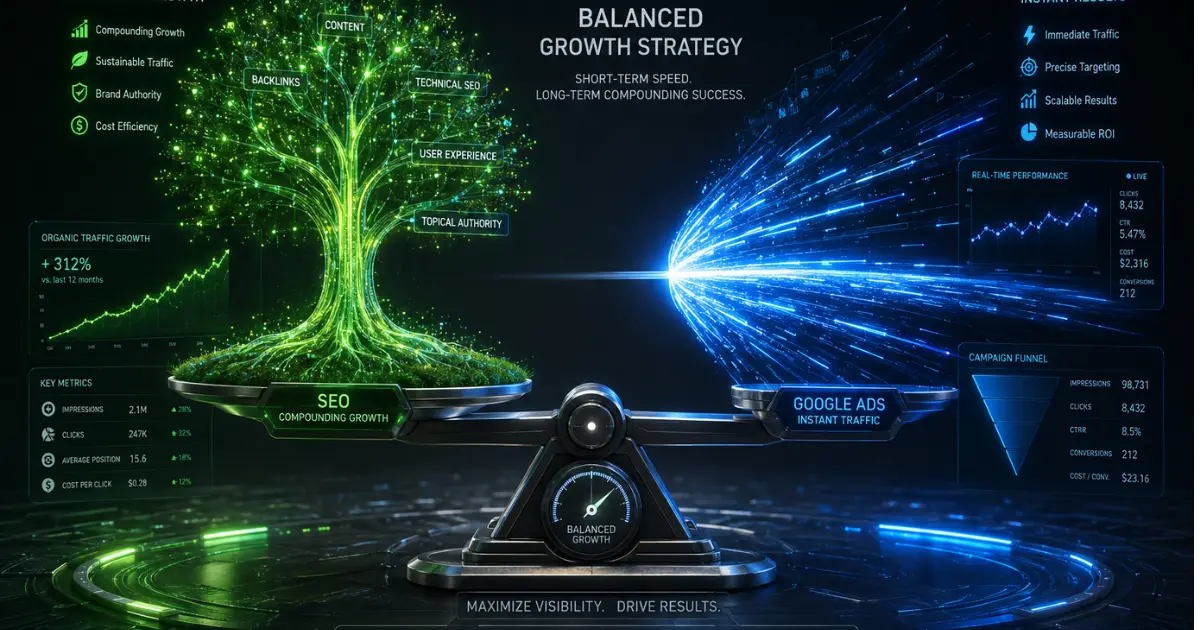
The most successful enterprises do not choose between these two strategies—they deploy a unified search framework that leverages the strengths of both.
-
Use Google Ads for Immediate Intent and Keyword Intelligence: Launch targeted PPC campaigns to capture immediate sales while simultaneously discovering which specific keywords yield the highest conversion rates and revenue.
-
Feed PPC Data into Your Long-Term SEO Strategy: Take the proven, revenue-generating keywords identified through your Google Ads campaigns and build deep, high-quality organic content around them to capture organic search rankings over time.
-
Dominate Search Engine Results Pages (SERPs): By claiming both the top paid ad position and the top organic search position for your brand’s core keywords, you double your search real estate, crowd out competitors, and maximize click-through rates.
The Search Investment Rule: Google Ads buys you immediate speed and market feedback, while SEO builds long-term equity and profit margins. Using them together creates a resilient customer acquisition system that protects your market share against algorithm changes and rising ad costs.
Final Verdict
When evaluating SEO vs Google Ads, there is no single winner—only the right channel for your current business stage. If you need immediate revenue, instant market feedback, and predictable campaign control, start with Google Ads. If you are building long-term domain authority and want to drive down acquisition costs over time, invest in SEO. For maximum market dominance, combine both into a symbiotic strategy that captures high-intent customers at every stage of their search journey.
About us and this blog
We are a digital marketing company with a focus on helping our customers achieve great results across several key areas.
Request a free quote
We offer professional SEO services that help websites increase their organic search score drastically in order to compete for the highest rankings even when it comes to highly competitive keywords.
Subscribe to our newsletter!
More from our blog
See all posts



Recent Posts
- What Is AI SEO? A Complete Guide to AI-Powered Search Optimization August 12, 2026
- How to Choose the Best Website Design Company July 27, 2026
- Best Google Ads Service Provider: Actionable Guide July 27, 2026